

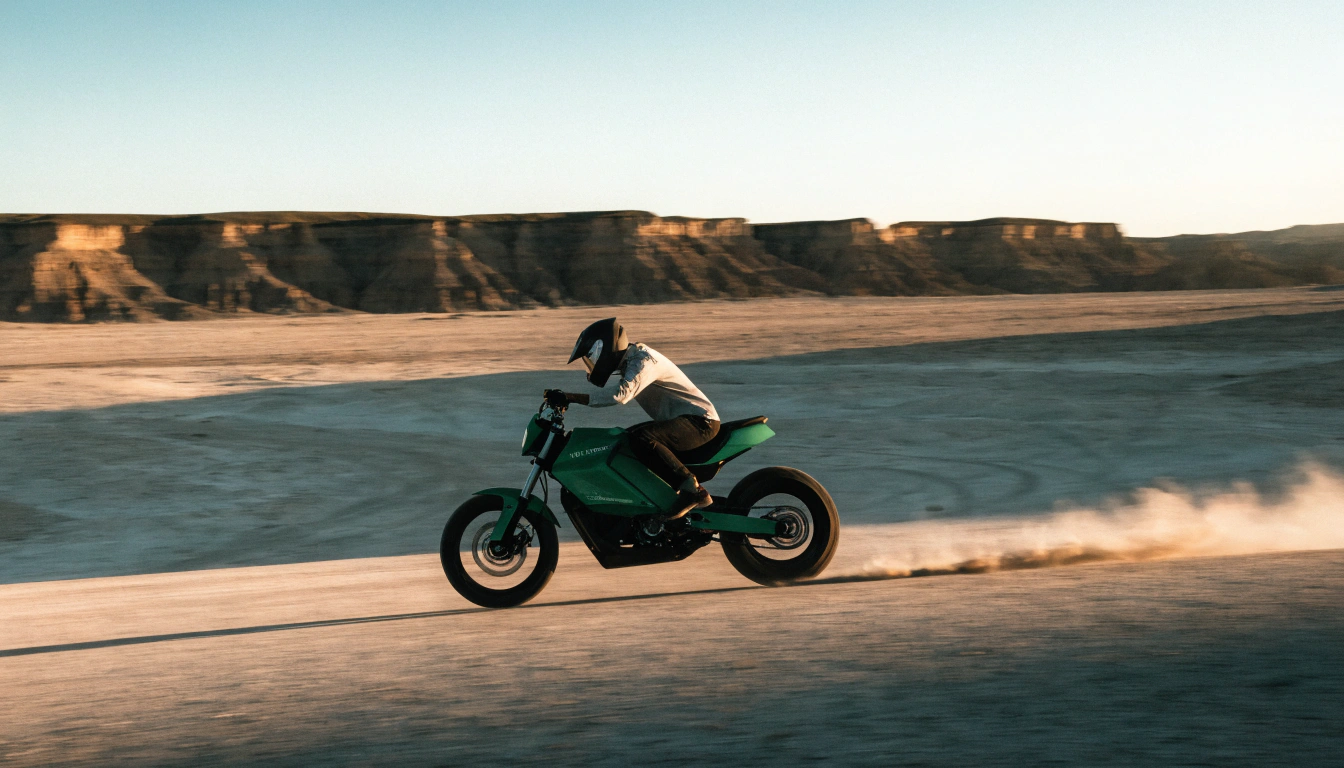
How Fast Is 3000 Watts in MPH? Electric Bike Speed Chart Explained
Cody picked up his 3000W build last spring and hauled it out to the hardpack near Bootleg Canyon, Nevada. His riding buddy Reyes didn't bother with the polite questions. He just pointed and asked the one thing everybody actually wants to know: “Okay — how fast does that really go?” Good question. Annoying answer. The spec sheet said one number, the seller had hinted at a bigger one, and the little display read something else entirely on a 95°F afternoon with the wind at Cody's back.
Here's what nobody prints on the box. A 3000W setup on an Adult Electric Off-Road Motorcycle usually lands somewhere between 40 and 55 mph out in the real world. Light rider, 72V pack, flat ground? Top of that range, easy. Heavier rider on a 48V system clawing up a grade? You're looking at 30, maybe less. Watts just don't turn straight into miles per hour. Voltage, controller, tires, terrain, your own body weight — they all get a vote. And most of them vote without telling you.
|
Quick answer:
A 3000W electric bike typically reaches 40–55 mph. The 48V versions sit lower (30–40 mph); 72V builds run higher (45–55+). Watts measure power, not road speed — the same 3000W rating can mean a fast top end or strong hill torque, depending entirely on the build.
|
How Fast Is 3000 Watts in MPH?
Short version: somewhere around 40 to 55 mph, with real spread at both ends. That's the honest reply to how fast 3000w in mph, and it holds up across pretty much every build you'll find for sale.
A 3000W motor is nothing like a normal commuter e-bike. Different animal, different rulebook — treat it like a high-performance off-road machine, not something you nip to the shops on. Shopping for a platform that's built for this kind of power instead of bodged up to handle it? Our full electric dirt bike lineup starts there.
Typical 3000W Electric Bike Speed Range
Most 3000W bikes settle into the 40 to 55 mph band when the battery, controller, and motor are all matched up properly. Flat pavement, a light rider, a quality 72V pack — that's where you brush the top end. A weaker 48V setup feels punchy off the line, then runs out of voltage headroom sooner than you'd hope.
One thing before you trust the chart below: these are estimates, not guarantees. A steep hill, a soft tire, a heavy rider, a tired battery — any of them shaves speed off in a hurry. I've seen a “55 mph” build top out at 22 grinding up a sandy grade. The number lied. The hill didn't.

|
Setup Type
|
Realistic Speed Range
|
Best Use
|
|
48V 3000W
|
30–40 mph
|
Short rides, lighter off-road use
|
|
60V 3000W
|
38–50 mph
|
Mixed trail and private-road riding
|
|
72V 3000W
|
45–55 mph
|
High-speed off-road riding
|
|
72V+ custom
|
55+ mph
|
Private land, advanced DIY builds
|
Why Watts Don't Convert Directly to MPH
Watts aren't speed. They're power. A 3000W motor gives you strong acceleration and serious climbing grunt, but the mph you actually see depends on how that power gets to the wheel.
Know what actually decides it? Battery voltage sets the motor's RPM. Controller amps decide how hard the system shoves current through. Tire size changes how far the bike rolls with every turn of the wheel. So two bikes can both wear a “3000W” sticker and ride nothing alike — one tuned for a fast top end, the other for hill torque and hauling weight. That's the whole reason “how much is 3000 watts in speed” never gives you one tidy number.
Street-Limited vs Off-Road Top Speed
Loads of high-power bikes ship capped in software. A 3000W bike might have the hardware for 45 mph and still leave the factory limited to 20 or 28 — for safer handling, or to slip under local rules. Doesn't mean the motor's soft. Means somebody put a leash on it.
Unlocked off-road setups go a whole lot faster. Just use that full power where it's actually allowed — private land, closed tracks, approved off-road areas. The CPSC low-speed e-bike definition under 15 U.S. Code § 2085 is where the legal line really sits, and we'll dig into it below. It changes everything about where you can ride.
3000W Electric Bike Speed Chart by Voltage
Voltage is the single biggest reason two 3000W bikes end up at wildly different top speeds. Higher voltage spins the motor faster and holds that speed better once the load piles on.

|
Battery Voltage
|
Typical 3000W Speed
|
Rider Feel
|
Main Tradeoff
|
|
48V
|
30–40 mph
|
Strong pull, lower top end
|
Less high-speed headroom
|
|
60V
|
38–50 mph
|
Better speed-and-climb balance
|
More battery cost and weight
|
|
72V
|
45–55 mph
|
Fast, strong, high output
|
Needs better brakes and control
|
|
72V+ custom
|
55+ mph
|
DIY performance zone
|
Higher safety and legal risk
|
Voltage on its own doesn't make the speed, mind you. The battery, the controller, the motor type, the tires, the frame — they all have to pull the same direction. One weak link and the rest doesn't matter.
48V 3000W Electric Bike Speed
A 48V 3000W bike usually hits 30 to 40 mph. Light rider, flat pavement, sure, you might squeeze a little more out of it — but 48V was never the setup for chasing a headline number. What you get instead is control. It suits the rider who wants torque for hills and quick bursts more than a flat-out sprint down a fire road.
Keep an eye on the battery here. A tired or cheap pack sags under load, which means the bike loses power right when the motor's begging for heavy current. A 3000W motor bolted to a weak battery never feels like a true 3000W ride. It feels like a tired one having a rough day.
60V 3000W Electric Bike Speed
Bump up to 60V and you're sitting in the 38 to 50 mph range. More speed than 48V, without going full 72V on yourself. Plenty of riders land here on purpose — it climbs steep sections, holds speed across open ground, and stays a notch tamer than a maxed-out build that wants to bite.
Controller settings still pull weight. A conservative one keeps the top speed down; a high-amp one sharpens the launch. Either way, a 60V 3000W bike belongs on private land or off-road, not in a bike lane — unless your local rules say otherwise in plain words.
72V 3000W Electric Bike Speed
Now we're talking. A 72V 3000W bike often reaches 45 to 55 mph, and with the right controller, motor, tires, and a good day, some custom builds push past that. This is the band most speed-chasers mean when they ask how fast is 72V 3000W in mph — the extra voltage hands the motor more RPM headroom and holds speed under load instead of folding.
The tradeoff is real, and it arrives fast. At 50 mph, braking distance jumps, small bumps start feeling like potholes, and low tire pressure gets genuinely sketchy. A 72V setup wants strong brakes, quality tires, stable suspension, and a frame built for the speed. If it feels nervous at 35, don't go hunting for 50. The bike's telling you something.
Limited vs Unlocked Controller Speed
The controller is the gatekeeper. It decides how many amps the motor gets, how hard the bike launches, and whether there's a ceiling on the top speed at all. Capped, a 3000W bike might stop dead at 28, 35, or 40. Unlocked, that same motor just keeps climbing.
Unlocking isn't free, though. It piles on heat, stresses the battery, eats your range, wears the brakes, and can quietly shove the bike into a different legal category overnight. For most riders, a rock-steady 40 beats a twitchy 55 every single time. Speed only matters when the bike can stop, turn, and stay planted under you.
|
Rider rule of thumb
If you can't comfortably hold the bike at a given speed for a full minute, in a straight line, you're not ready to add 10 mph to it. Sort the brakes and suspension first. Chase the controller later — or never.
|
What Affects the Real MPH of a 3000W E-Bike?
The motor's just one link in the chain. A whole stack of small details decides the final mph: battery voltage, battery quality, controller output, motor type, rider weight, terrain, tire setup, wind. Get one of them wrong and the spec sheet quietly starts lying to you.

Battery Voltage and Battery Quality
Voltage helps set the maximum speed — higher voltage supports higher RPM, which is exactly why 72V bikes usually beat 48V on the top end. Quality counts just as much, maybe more. Good batteries hold their voltage under load; weak packs sag the second you accelerate or hit a climb. Capacity — the amp-hour number — mostly affects range, not speed. A bigger battery rides longer. It does not ride faster. People mix those two up constantly.
Motor Type and Controller Output
Most 3000W bikes run hub or mid-drive motors. Hub motors are the common pick for high speed — simple, direct, fewer drivetrain parts to fret over. Mid-drives can climb better by working through the bike's gearing, but they lean hard on chains and sprockets and wear them quicker.
Controller output decides how hard the motor's allowed to work. Low amp limits make a 3000W motor feel lazy, almost half-asleep. A higher-output controller pulls harder and runs hotter — and the wiring and connectors have to be up to that load, or something gets cooked.
Rider Weight, Cargo, and Terrain Type
Your weight matters more than the brochure lets on. A heavier rider, or a loaded backpack, makes the motor grind harder on every launch and every climb. Flat pavement gives the best numbers. Gravel, sand, mud, grass, steep hills — they all bleed speed off you whether you like it or not.
A 3000W bike might hit 50 on smooth pavement and drop to 25 on a steep climb. Totally normal — the motor's spending its power on torque instead of speed right then. Slow grinding up a hill at full power also heats the motor faster than short bursts on the flat, which is its own reason to back off the throttle.
Tire Size, Tire Pressure, and Wind Resistance
Tire size changes how the speed feels — bigger wheels cover more ground per rotation, smaller wheels feel snappier off the line. Underinflated tires pile on drag, drain the battery, and leave the bike feeling vague and floaty. Knobby tread grips off-road like a champ but rolls slower than street rubber.
And wind. Above 30 mph it turns into a real limiter. A headwind shaves several mph off your top speed without asking; tuck in low on open ground and you'll claw a bit of it back.
3000W vs 500W, 1000W, and 2000W E-Bike Speeds
A 3000W bike isn't a small step up from a normal e-bike. It's a leap — in power, weight, speed, and the responsibility that rides along with all three. A 500W or 750W bike handles commuting, bike paths, light hills. A 3000W machine is built for high speed, steep climbs, and private-land or off-road riding. Different jobs entirely.

|
Motor Power
|
Typical Speed Range
|
Best Fit
|
|
500W
|
20–25 mph
|
City riding, light hills
|
|
750W
|
20–28 mph
|
Commuting, heavier riders
|
|
1000W
|
28–35 mph
|
Off-road use, stronger climbs
|
|
2000W
|
35–45 mph
|
High-power trail riding
|
|
3000W
|
40–55 mph
|
High speed, private land, off-road
|
500W and 750W Commuter Speed Range
A 500W bike rides around 20 to 25 mph; a 750W reaches 20 to 28, depending on class limits. Both are easy to manage in traffic and on shared paths, and they sip battery next to the high-power stuff. For errands and moderate hills, 500W to 750W is plenty. Honestly, the ride feels like a bicycle with a quiet helping hand — which is the whole point of it.
1000W and 2000W High-Power Speed Range
A 1000W bike often hits 28 to 35 mph unrestricted; a 2000W setup reaches 35 to 45 with the right battery and controller behind it. Both already sit outside a lot of normal e-bike rules, which is why riders run them off-road, for heavy loads, or on private roads. A 3000W setup piles on more top speed and stronger pull again — and leans harder on brakes, frame, tires, and battery safety to keep all of it in check.
Why 3000W Feels Different at Higher Speeds
A 3000W bike keeps pulling long after lower-power bikes start to fade — brilliant on steep hills, rough ground, and faster open sections. It also answers the throttle faster than you might expect. A small twist makes a real surge, especially on loose dirt or wet pavement. And at 40 to 55 mph, the small mistakes get expensive in a hurry: a soft tire, a loose bolt, a worn brake pad. None of that's a big deal at 18 mph. All of it is at 50.
|
Valtinsu EM-5 — Adult Electric Off-Road Motorcycle
48V geared motor | 3,840W peak | 190 N·m torque | 37 mph | IPX6 | Three ride modes | Age 13+
Where a raw 3000W hub build chases a top number, the EM-5's geared motor puts 190 N·m of torque low in the rev range — the part you actually feel hauling out of a tight climb from a dead stop. Built for trail riding on private land, OHV parks, and designated off-road areas. Not for public roads.
From $1,259 USD | Free U.S. shipping | View the EM-5 →
|
Is a 3000W Electric Bike Street Legal?
Short version: usually not — at least not as a normal e-bike. A 3000W motor blows clean past the standard e-bike class limits on both motor power and assisted speed. That doesn't make the bike illegal to own. It makes where and how you ride it the whole ballgame.
Under federal law, a low-speed electric bicycle has working pedals, a motor under 750W, and a motor-only top speed under 20 mph. NHTSA treats anything faster, fitted with road equipment, as a motor vehicle. A 3000W bike doing 40 to 55 mph clears that bar without breaking a sweat.
Why 3000W Exceeds Standard E-Bike Class Limits
Most state e-bike rules run on a three-class system — Class 1 and 2 cap at 20 mph, Class 3 at 28. A 3000W motor sits way up above all three. A bike that runs 40 to 55 gets treated more like a moped, a motorcycle, or an off-highway vehicle, depending on your state and your local road law.
A quiet motor doesn't make a high-power bike road-legal. Police and the DMV look at power, speed, pedals, equipment, VIN status, and intended use — not how little noise the thing makes. So don't buy a 3000W bike on top speed alone. Check the legal status first, before the money ever leaves your account. Cheaper to learn it now than at the roadside.
Public Roads vs Private Land and Off-Road Riding
Public roads usually want road-legal gear if the vehicle isn't a standard e-bike: lights, turn signals, mirrors, horn, plate, insurance, registration, a motorcycle license. The full list. Private land is a different story — if you own it, or you've got the owner's say-so, a 3000W machine can run as an off-road bike with none of that paperwork hanging over it.
OHV parks and trails set their own permits, age rules, helmet rules, and sound or access limits. Electric power doesn't buy you a free pass on any of it. An Adult Electric Off-Road Motorcycle and a 500W pedal-assist commuter are different machines, and land managers can tell them apart even when riders pretend they can't.
What to Check Before Riding a 3000W E-Bike
Don't lean on a seller's speed claim or some forum post from 2019. Pull up the rules for your exact location first. Here's the short checklist worth running through:
-
Motor wattage limit in your state or country
-
Maximum assisted speed allowed where you ride
-
Pedal requirement and throttle rules
-
Registration, insurance, helmet, and age rules
-
Bike-lane, sidewalk, and trail access rules
-
DMV or OHV permit requirements
No pedals, no road VIN, or “off-road use only” stamped on the paperwork? Treat it as an off-road vehicle until you've got something official telling you otherwise.
Safety at 40–55 MPH on a 3000W Electric Bike
At these speeds you're closer to light motorcycle riding than casual cycling, and the gear has to catch up to that fact. At 20 mph, a basic commuter setup feels fine. At 50, weak brakes, soft suspension, or cheap tires turn dangerous fast. Speed itself isn't the enemy here. Poor control at speed is the thing that hurts you.
Brakes, Tires, and Suspension
Brakes matter most the higher you go. Hydraulic disc brakes are the strong preference on high-power bikes for stopping control — nothing else gives you the same confidence dragging speed off a long downhill. Tires should be rated for the speed, load, and terrain you actually ride. Suspension keeps the wheels planted; if the bike bounces or wobbles over bumps, slow down and inspect it before you push on. Don't chase a top number on worn pads, loose spokes, or cracked tires. That's exactly how good days end badly.
Protective Gear for High-Speed Riding
At 40 to 55 mph, a bicycle helmet isn't enough for a lot of what you'll meet out there. A full-face helmet covers the face and jaw the bicycle lid leaves wide open. Then add gloves, eye protection, an armored jacket, knee and elbow guards, and proper boots — off-road crashes serve up rocks, roots, and hard landings, not soft grass. Gear has to fit and stay put through a tumble. Dress for the speed you could crash at, not the one you plan to cruise at.
Why DIY Top-Speed Claims Need Caution
DIY speed claims are fun to read, and they almost never tell the whole story. One r/eBikeBuilding thread famously clocked a 72V 3000W home build at 63 mph — genuinely impressive, and also a short run, on one specific bike, with a light rider, on smooth pavement. A speed screenshot won't show you the brake quality, the frame strength, the tire condition, or how hot that battery got afterward. Use those numbers as reference points, not proof of what to buy. A reliable 45 mph build beats a sketchy 60 in every way that actually counts.
Range and Battery Drain at High Speed
High speed drinks battery. A 3000W motor pulls a lot of current on full throttle, on climbs, into a headwind. Range estimates usually assume gentle riding, so a big long-range claim can quietly fall apart at 45 to 55 mph — and it falls apart faster on dirt, hills, sand, and soft trail.

Why Faster Riding Uses More Battery
As speed climbs, wind resistance climbs harder, and the motor's working overtime just to shove you through the air. A bike cruising at 25 sips power. The same bike at 50 gulps it down. Hard launches burn through energy fast too. Late in a ride, voltage sag can make the bike feel slower even though the motor hasn't changed a thing — the battery just doesn't have it left to give.
How Hills and Heavy Loads Reduce Range
Hills make the motor trade speed for torque, and torque costs current and heat. A heavier rider, a backpack, tools, cargo — all of it adds load on every start and every climb. Soft terrain cuts range more than most riders expect; sand in particular is brutal on a battery. If your route's got steep climbs in it, plan range on real riding, not the rosy number in the listing.
Tips for Balancing Speed and Battery Life
Easiest win going: drop your cruising speed. Riding at 30 to 35 stretches range a lot further than holding 50 the whole way. Keep the tires at the right pressure — low pressure adds drag and heat for nothing. Skip the hard launches you don't actually need; smooth throttle is kinder to the battery, motor, tires, and controller all at once. If range matters more to you than top speed, buy a setup with quality cells, decent cooling, and smart controller tuning.
Buying Tips for a 3000W Electric Bike
Buy a 3000W bike as a full system, not a number on a sticker. The best setup matches power, voltage, controller output, brakes, tires, frame strength, and — don't skip this one — legal use. A cheap high-watt bike costs you more later, when the battery's weak or the parts are impossible to source. For real off-road performance, high-performance electric dirt bikes beat trying to force a commuter e-bike into a high-speed role it was never built to handle.
Match Voltage to Your Riding Goal
Pick voltage by how you actually ride, not how you imagine riding. A 48V setup covers short rides and moderate speed. A 60V gives more pull and higher speeds without going extreme. A 72V is for strong top speed and riders who already get high-power riding in their bones. Don't grab 72V just because it sounds faster on paper — make sure the brakes, tires, suspension, frame, and battery can all keep up with it. A good setup feels stable before it ever feels fast.
Choose Quality Batteries and a Reliable Controller
The battery is one of the most important parts of the whole bike, full stop. Good packs deliver power consistently and safely. Check the voltage, amp-hour rating, discharge rating, charger type, and BMS — and ask the seller what cells they use. If they dodge the question, well, that's an answer too. The controller has to match the motor and battery; a bad match means heat, weak output, or reliability headaches down the road. Steer clear of vague listings that just say “3000W” with no voltage, no controller amps, no speed limits anywhere in sight.
Check Brakes, Frame Strength, and Warranty Terms
A 3000W bike needs stronger parts than a casual commuter, no way around it. Brakes should handle repeated hard stops at speed without fading. The frame should be built for the weight and the force — look hard at the welds, dropouts, suspension mounts, and wheel strength. Read the warranty closely while you're at it: some brands won't cover unlocked controllers, modified wiring, or off-road abuse. Ask how replacement parts get handled before you pay, not after something snaps.
Pick the Right Bike for Off-Road or Private-Land Use
A 3000W bike makes the most sense when you've got legal places to actually use the power: private land, off-road parks, farms, ranches, closed tracks, approved trails. If your real goal is commuting in bike lanes, a lower-power legal e-bike is the smarter buy — easier to park, insure, and ride without legal stress sitting on your shoulder. If your goal is hill climbing and high-speed dirt, buy a bike built for that. Just don't judge the whole thing on its top speed alone.
Which Valtinsu Fits Your Riding?

|
EM-5 Ages 13+ — TRAIL STARTER
48V | 3,840W peak | 190 N·m | 37 mph | IPX6
Three modes (25 / 40 / 60 km/h). The only Valtinsu model rated under 18. Geared-motor torque arrives low in the rev range — forgiving for a first season on dirt, and a long way from a hot-rodded commuter.
|
|
EM-5 Pro Adults 18+ only — PERFORMANCE TRAIL
60V | 4,800W peak | 240 N·m | 43 mph | IPX6
Black or Volt Green. Geared motor for fire roads, singletrack, and 30°+ grades — the real-spec answer for adults who want 3000W-class power from a platform built for it, not bodged together for it.
|

|
Age rule — no exceptions:
EM-5 = 13+ | EM-5 Pro = 18+ adults only. Parents shopping for a rider under 18 must choose the EM-5. The EM-5 Pro is not sold for minors, full stop.
|
Conclusion
So — how fast is 3000w in mph? Call it 40 to 55, then adjust for your voltage, your weight, your terrain, and how the controller's been tuned. A 72V build chases the top of that range; a 48V setup trades top speed for control. The display number is the easy part. What it costs you in brakes, gear, range, and legal homework — that's the part actually worth chewing on before you buy.
If most of your riding is dirt and private land, a purpose-built Adult Electric Off-Road Motorcycle hands you that power without the guesswork of a hot-rodded commuter. If it's bike lanes, a legal e-bike saves you the headache. Either way, the better question was never “how fast can it go.” It's “where am I actually allowed to use this, and can I stop it when I need to?” Answer those two honestly and the speed mostly sorts itself out.
|
Get the buyer's guide
Want the full breakdown before you spend? Grab our Adult Electric Off-Road Motorcycle Buyer's Guide — voltage, torque, age ratings, and the legal basics, all in one place. Browse the lineup to get started.
|
FAQs
How many mph is 3000W?
Most land at 40 to 55 mph. A 48V build stays nearer 30 to 40; a light rider on a 72V pack and flat ground can touch the top. Voltage, controller amps, weight, terrain, tires, and wind all shift it, so get the full specs before trusting any single mph claim.
Is 3000W street legal?
Usually not as a standard e-bike. U.S. class rules are built around motors under 750W and assisted speeds of 20 to 28 mph. A 3000W bike gets treated like a moped, motorcycle, or off-highway vehicle — which can mean registration, insurance, lights, and a motorcycle license. Call your DMV with the exact model before you ride it anywhere public.
How much is 3000 watts in speed?
Roughly 40 to 55 mph when the whole system supports it — but watts describe motor power, not road speed. The same 3000W can be tuned for top end, hill torque, or heavy loads. A 72V hub motor chases mph; a torque-focused off-road setup trades top speed for climbing control.
How fast will a 3000 watt motor go?
Often into the 40 to 55 mph range, higher on a tuned 72V build. The motor alone doesn't decide it — a weak battery, low-output controller, heavy frame, or soft tires all hold it back. Flat pavement supports the top speed; hills, mud, sand, and wind quietly eat it.
How fast is 72V 3000W in mph?
About 45 to 55 mph in real use, sometimes past 55 on a carefully matched custom build. The 72V pack gives the motor more RPM headroom and holds speed under load. Don't push a 72V bike to its limit on weak brakes or soft suspension — budget for those, not just the battery.
Can an e-bike go 40 mph?
Yes, a high-power 3000W setup can with the right battery, controller, and terrain. But a 40 mph bike often falls outside normal e-bike classes and gets treated like a moped or off-road vehicle. Braking distance and wind both grow at that speed, so use 40 mph power only where it's legal and safe.
What happens if I get caught on my electric scooter?
Depends on local law — a warning, fine, ticket, impound notice, or a registration order. Same goes for high-power bikes that exceed legal limits: police may not treat them as normal e-bikes. Riding on sidewalks, bike lanes, or near schools changes the rules, and insurance can deny a crash claim made outside the legal category.
Is 48V 1000W legal?
Not always as a standard e-bike. Many U.S. areas cap class-style e-bikes below 1000W even when the bike isn't fast. Rules also weigh pedals, assisted speed, throttle, age, and where you ride. A 48V 1000W bike may be fine on private land and still fall outside public-road e-bike rules — check both wattage and speed limits locally.
Sources
- U.S. Code, 15 U.S.C. § 2085 — Low-Speed Electric Bicycles (Cornell Legal Information Institute).
- NHTSA, Vehicle Classification Interpretation Letter 08-002289as.
- Federal e-bike definition referenced via 15 U.S.C. § 2085 on motor power and the 20 mph limit.
- Valtinsu, Electric Dirt Bike Collection.
- Valtinsu, EM-5 Electric Off-Road Adult Dirt Bike.
- Valtinsu, EM-5 Pro Advanced Dirt Bike — Green.


Looking for something else?

Electric Dirt Bike Setup for Hardpack Trails
LEARN MORE
Electric Dirt Bike Mud Riding: Setup, Technique and Cleanup
LEARN MORE
Can You Ride an Electric Dirt Bike on Forest Service Roads?
LEARN MORE
Electric Dirt Bikes at OHV Parks: Rules and Checklist
LEARN MORELooking for something else?
Hot-Weather Electric Dirt Bike Guide: Battery, Rider and Range
LEARN MORE
How to Ride an Electric Dirt Bike Over Wet Roots
LEARN MORE
Electric Dirt Bike Ruts and Washouts: Line Choice and Recovery
LEARN MOREYou may also like
VALTINSU EM-5 Off-Road Electric Dirt Bike
$1,371.00
$2,206.00
VALTINSU EM-5 Pro Off-Road Black Electric Dirt Bike
$2,404.00
$2,687.00
VALTINSU EM-5 Pro Green Electric Dirt Bike
$2,404.00
$2,687.00
VALTINSU EM-5 Ultra Electric Dirt Bike
$3,112.00
$3,536.00
Further reading
Electric Dirt Bike Tire Pressure by Terrain: PSI Starting Points
Electric dirt bike tire pressure should start with the exact tire and motorcycle limits, then change with terrain, rider load, tire construction and impact risk. Softer ground usually favors a lowe...
Electric Dirt Bike Suspension Sag Setup: A Rider-Weight Method
Electric dirt bike suspension sag setup starts by measuring the rear suspension fully extended, then measuring it again with the bike alone and with you in full riding gear. Use those readings to e...
Your First 100 Miles on an Electric Dirt Bike: Break-In and Service Checklist
The first 100 miles on an electric dirt bike are an inspection period rather than a gas-engine-style mechanical break-in. Check the motorcycle at 0, 25, 50 and 100 miles for hardware settling, chai...
Electric Dirt Bike Ground Clearance vs Suspension Travel: What Each Number Means
Electric dirt bike ground clearance is the vertical space between the ground and the motorcycle’s lowest relevant chassis point, while suspension travel is how far the wheel and suspension can move...