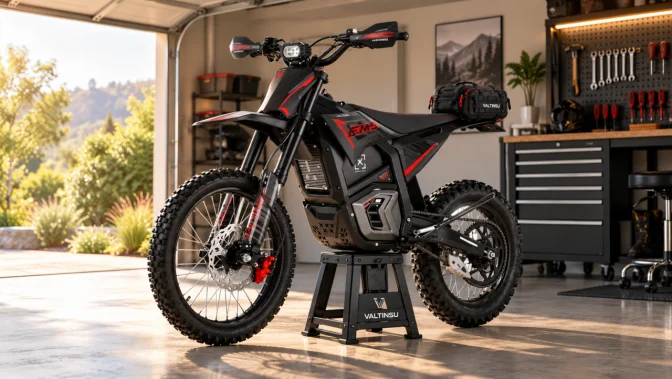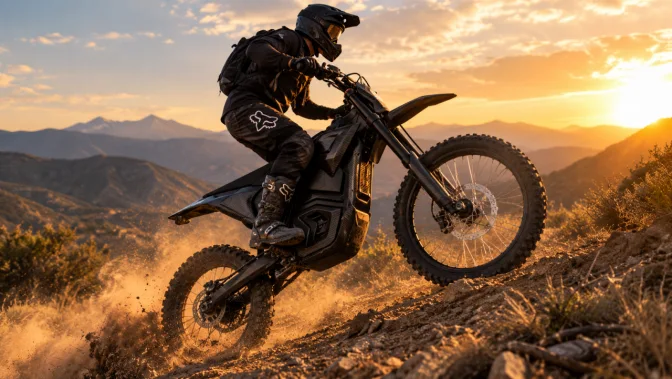
72V Electric Dirt Bike Performance: Acceleration, Hill Pull and Heat Under Real Testing
Ask anyone shopping for a 72V electric dirt bike what they want to know first and it’s almost always top speed.

Fair enough. Most stock bikes in this class land somewhere from 45 to 65 mph.
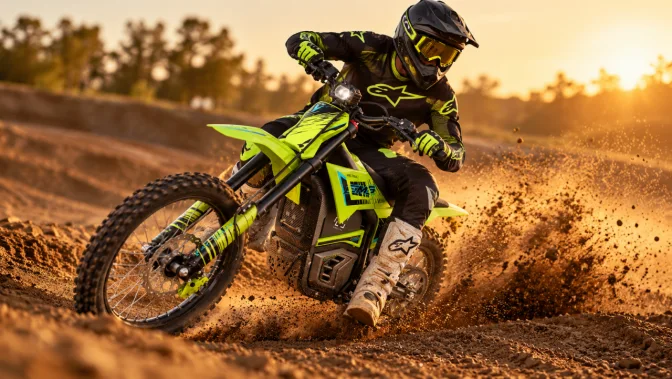
After a season on dirt, though, top speed is rarely what riders bring up. They talk about the hill behind the campground that the bike cleared easily in spring and now struggles with on the third lap, or the July afternoon it went soft for no obvious reason. Acceleration, hill pull and heat are the focus here, written for adult electric off-road motorcycle buyers.
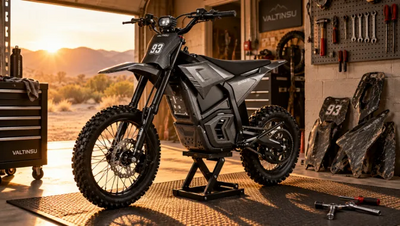
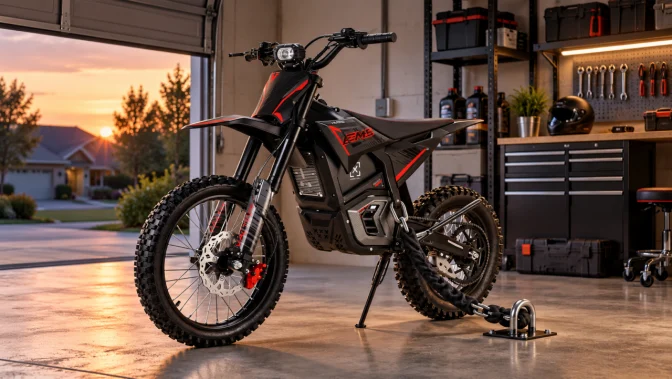
Our worked example is the 72V EM-5 Ultra, next to bikes from MotoTec, Rawrr, Talaria and Stage2.
|
Model |
Peak power |
Top speed |
Battery |
Stated acceleration |
|
MotoTec Pro 72V |
8,000W |
56 mph |
72V 35Ah |
Not stated |
|
Rawrr Mantis X |
6,500W |
50 mph |
72V |
0 to 30 mph in 4 s |
|
Talaria Sting R MX4 |
6,000W |
53 mph |
72V |
Not stated |
|
Stage2 M2 |
14,000W |
65 mph |
72V 45Ah |
Not stated |
|
Valtinsu EM-5 Ultra |
8,000W |
56 mph |
72V 25Ah Samsung |
4 s |
Published manufacturer and retailer figures, October 2026. Every brand tests its own way.
What 72V Actually Changes

So what does the extra voltage buy? A brushless motor’s free spin speed goes up with voltage, which is where the higher top end comes from, though sprockets, tires and controller tuning decide how much of it you get.
Less obvious is current. Hold 3,000W and a 72V pack is supplying somewhere around 42 amps, where a 60V pack would be pushing 50. Cables and controllers turn more of that into heat as amps climb (it goes with the square), so the 72V bike wastes roughly 30% less doing the same job.
Nobody notices that on a quick blast across a field. Halfway up a long climb in August, maybe they do.
Acceleration: What "4 Seconds" Tells You

A small annoyance with 72V spec sheets is that lots of them print an acceleration time and never say to what speed. Rawrr is a welcome exception and lists 0 to 30 mph in 4 seconds for the Mantis X.
Valtinsu quotes 4 seconds for the EM-5 Ultra and 5 for both the 60V EM-5 Pro and the 48V EM-5, again with no end speed. Fine for comparing those three. Not much use against another brand.
The Second Half of the Battery
Anyone who has done back to back pulls on one charge knows the bike feels livelier early in the day. Lithium packs sag under a hard pull, and they sag more when they are low or cold. The Ultra’s charger takes the pack to 84V against a 72V nominal rating, so there is a real spread between full and half.
If you are going to time launches, time a few fresh off the charger and a few with about a third left.
Hill Pull: Torque, Grade and Total Weight
Most riders underestimate how much of a climb is just weight. A 180 lb rider in gear on a 143 lb EM-5 Ultra adds up to 323 lb that the motor has to drag uphill.
Point that at a 45 degree face (a 100% grade, steeper than anything you’d ride on purpose) and gravity is pulling back with about 71% of it, roughly 228 lb, before the dirt gets loose. Real fire road climbs are a lot gentler, thankfully.
Torque at the wheel is what pushes back. Valtinsu rates the Ultra at 203 lb-ft (275 N·m) and the EM-5 Pro at 177 lb-ft, both chain driven and both listed for 45 degree climbs.
Peak vs Rated Power on a Long Climb
Peak power is a few seconds of shove off the bottom. A minute into a long grade, the bike is living on its rated output instead: 3,000W for the Ultra and 2,500W for the Pro. At 746W per horsepower that is about 4.0 hp versus 3.4 hp of steady pull, or 10.7 and 7.5 hp at peak.
|
Editorial note Riders who mostly do long climbs should shop on rated power. If your trails are short and steep, peak tells you more. And if a listing only gives one of the two, email the seller for the other. |
Heat: Where 72V Bikes Lose Power

When a bike goes flat halfway up a hot climb, the usual culprit is the controller protecting itself, not a part failing.
Motor windings, controller and battery all warm up under load. Once any one of them hits its limit the controller trims output and waits, and from the seat it just feels like the bike gave up.
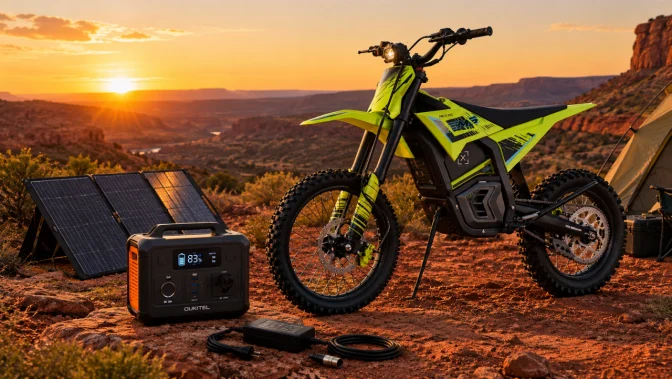
Heat also eats batteries slowly. Battery University’s BU-502 figures show lithium-ion cycle life dropping about 40% at 40°C compared with 20°C, and BU-410 gives 0°C to 45°C for charging. After a summer ride somewhere like Arizona, let the pack cool before charging.
Derating or a Weak Pack?
• Power that returns after a break in the shade was heat.
• If it only fades below half charge, think voltage sag.
• Cutting out over bumps tends to be a loose connector.
• Still weak on a full, cool battery? Get the pack load tested by a technician.
|
Warning Please don’t unlock controller limits or bypass thermal cutoffs chasing a few extra mph. Those limits are what stand between a hot afternoon and a cooked motor or pack. |
|
Tip Range depends on storage and charging habits nearly as much as riding. Our write up on battery habits that cost range covers the common ones. |
A Real World 72V Test You Can Repeat
Spec sheets are measured somewhere flat and mild. Your trail isn’t, so the numbers worth trusting are the ones you collect yourself, the same way each time.
1. Weigh yourself in full gear and write it down.
2. Start on a full charge and note what voltage the display shows.
3. Time 0 to 30 mph on a GPS app over flat hardpack, three runs each way.
4. Choose a climb you know, say a fire road pitch outside Colorado Springs or a wash exit at Bootleg Canyon in Nevada, and ride it three times in a row, checking speed at the same rock or post.
5. Do steps 3 and 4 again around half charge.
6. Write down anything strange, like a power cut, a warning light or an error code, and how long it took to clear.
A third climb that is clearly slower than the first usually means heat. A drop that only shows up at half charge is more likely sag.
72V vs 60V: EM-5 Ultra and EM-5 Pro

These two make a tidy comparison because Valtinsu built them on one chassis. Same 143 lb, same 17 and 14 inch wheels, same 5.9 inches of front travel and the same 45 degree rating, so whatever differs comes down to the power system.
|
Spec |
EM-5 Pro (60V) |
EM-5 Ultra (72V) |
|
Peak / rated power |
5,600W / 2,500W |
8,000W / 3,000W |
|
Wheel torque |
177 lb-ft |
203 lb-ft |
|
Top speed |
52 mph |
56 mph |
|
Stated acceleration |
5 s |
4 s |
|
Battery energy |
60V 27Ah, 1,620Wh |
72V 25Ah Samsung, 1,800Wh |
|
Rated range |
59 mi |
75 mi |
|
Reverse gear |
No |
Yes |
|
Price at time of writing |
$1,699 |
$2,199 |
For riders who climb a lot, carry more weight or haul a loaded pack, the 72V EM-5 Ultra is where the extra rated power and lower current earn their keep.
On tight technical trails it’s closer than the spec sheet suggests. The 60V EM-5 Pro gives up 4 mph at the top, and most people wouldn’t feel much else at trail pace. Seat height and fit are worth checking across the full electric dirt bike lineup too.
Ride It Where It Is Allowed
Almost every 72V dirt bike is sold for off-road use only. On National Forest land, each forest publishes a Motor Vehicle Use Map that shows which routes are open to which vehicles. Wear a helmet with the DOT label, which means it meets FMVSS No. 218 (NHTSA).
Regulators are looking at batteries too. The CPSC proposed a lithium-ion standard for micromobility products, 16 CFR 1265, in June 2026 (SGS summary).
Conclusion
A 72V electric dirt bike pays for itself on long climbs and hot days, when lower current and more rated power keep it pulling after 48V and 60V bikes start to fade. If top speed is the only reason you want one, that’s a thin reason.
Do a few timed launches, ride the same hill three times and watch for derating. Then put your notes next to the spec sheets for adult electric dirt bikes built for real trails, ours included.
FAQs
How fast does a 72V electric dirt bike go?
Most stock ones top out between 45 and 65 mph. The MotoTec Pro 72V and the EM-5 Ultra are both listed at 56 mph, the Talaria Sting R MX4 at about 53 and the Stage2 M2 at 65. Gearing, body weight and ride mode move your own number around.
Is there a 60 mph electric dirt bike available?
Yes, a handful go past 60 mph straight out of the crate. Stage2 lists the M2 at 65 mph and Sur-Ron claims 68 for the Storm Bee. They cost more and weigh more.
How fast is 72V 5000W in mph?
Usually somewhere in the 50s. The Kollter ES1-X Pro is listed at 56 mph and a 5000W MotoTec 72V at 59, and the gap between them is mostly gearing.
How fast do 72V 3000W go?
That depends on whether the 3,000W is peak or rated. As a peak figure, think 35 to 45 mph. The EM-5 Ultra is rated 3,000W continuous with a far higher peak, which is how it gets to 56 mph.
How fast is 72V 10000W?
Expect roughly 60 to 77 mph. MotoTec lists 77 mph for the 12,000W Venom, yet Stage2 quotes 65 mph for its 14,000W M2. Past 10kW, gearing and controller tuning matter more than watts.
Can a Sur-Ron go 100 mph?
Not as it comes from the factory. A Light Bee X runs out of steam near 47 mph and Sur-Ron claims 68 for the 72V Storm Bee. The 100 mph builds use custom motors, controllers and batteries, and reliability usually suffers for it.
How many HP is a 72V 3000W motor?
Divide by 746 and you get roughly 4 hp of continuous output. An 8,000W peak works out to about 10.7 hp.
Why does a 72V electric dirt bike lose power on long climbs?
Usually it’s heat or voltage sag. The controller pulls power back when the motor, controller or pack runs hot, and a low pack sags harder under load. Pull over, let it cool, and see if the display shows a code.


Looking for something else?

Electric Dirt Bike Replacement Parts Availability: What Buyers Should Verify Before Ordering
LEARN MORE
How to Check an Electric Dirt Bike for Safety Recalls by Model and Serial Number
LEARN MORE
How to Choose an Electric Dirt Bike Repair Shop: Questions to Ask Before Service
LEARN MORE
How to Lift a Fallen Electric Dirt Bike Without Hurting Yourself or the Bike
LEARN MORELooking for something else?

Electric Dirt Bike Fall Riding on Wet Leaves: Grip, Hidden Obstacles and Braking
LEARN MORE
Electric Dirt Bike Trailside Power Loss: Recovery Plan When the Battery Is Dead
LEARN MORE